Reading the Waters for Peacock Bass at
Lower Peirce Reservoir
 Entrance to Lower Peirce Reservoir
First of all, I would like to state that there is no scientific basis to what I will be writing. Over the years, I had very haphazardly kept a fishing log on my fishing adventures at Lower Peirce Reservoir. Some of my explanations might seem to be scientific, but they are not. Only speculations, but it did catch a lot more fish for me.
If you use my methods and catch more fish, please remember to practice Catch And Release. Remember not to fight the fish for too long. It will be worn out and will become an easy target for the Tomans waiting in ambush for them when you release them.
I hope that by sharing my observations, I can encourage those young fishermen who had experienced poor catch rates at Lower Pierce Reservoir to pick up a few pointers here and use them to increase their catches instead of using illegal means to achieve their targets.
There are three methods that I had used to increase my catch rate. Some might view it as unethical and some might say I am cheating. If you are of such opinion, then don’t use the methods that I have described.
In the western countries, it is called matching the hatch and reading the waters. What I am trying to do here is to teach you how to read the waters at Lower Peirce Reservoir for Peacock Bass.
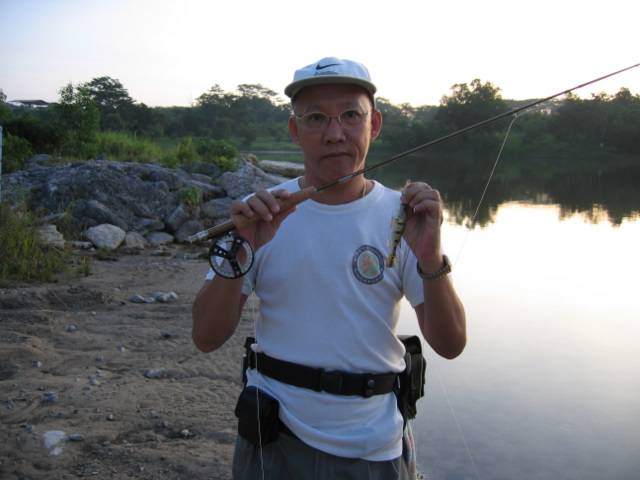
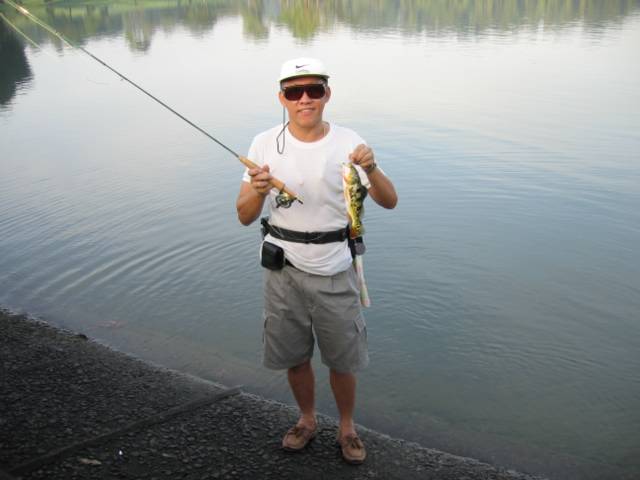
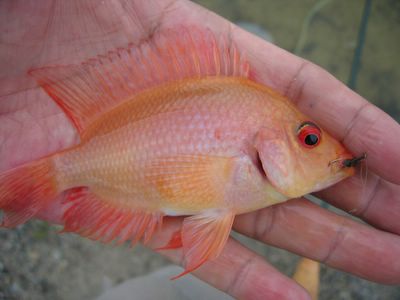
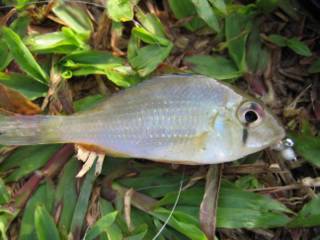
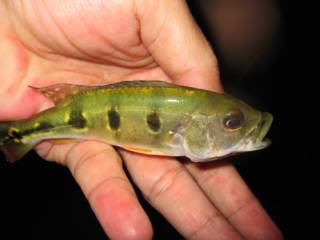 A brilliantly coloured juvenile Peacock Bass
Hopefully, you can increase your catch rate without resorting to using illegal methods like nets, fish traps, or using chicken liver, frogs, live goldfish and other organic pollutants as baits. The hand of the law is long and sooner or later offenders will be caught and prosecuted.
In future, with responsible fishermen fishing at the reservoirs, we can request the authorities to open up a bit more area for us and our younger generation to enjoy. Hopefully the day will come when fly fishermen can be allocated a section of some reservoirs to cast their lines without endangering the other park users with their back casts.
Dirty Green Scum After The Rain
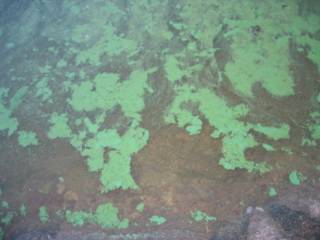 Nutritious Green Scum after heavy rain.
If you keep and breed fishes like discus you will be familiar with this. If you had observed people breeding and bringing up grouper fries, barramundi fries or even prawns, you will be even more familiar.
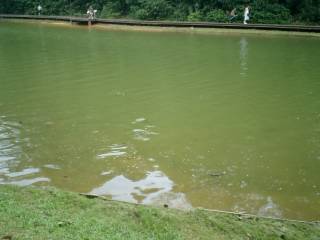
I had observed over the years that after a very heavy rain, a kind of green scum or algae will grow all over Lower Pierce Reservoir after a day or two of sunshine. This algae is the food for rotifers, a kind of microscopic aquatic animal. Shrimps, fish fries and other minute creatures in return feed on rotifers. Rotifers in this case is at the very bottom of the food chain in our reservoirs, I think.
After two to three days, there will be a sudden burst of activities around the waters that was dirtied by the green scum and algae. The water would now have been reverted back to its clean and clear look. These activities will last for another two days or more depending on the number of bait shrimps or fish that was spawned. During this period, you can just throw anything into the water and get a Peacock Bass. There is so much food in the water and the Peacock Basses are at such a feeding frenzy that they will grab any fly cast. So the next time, when you go to Lower Pierce Reservoir and find the whole place covered with the dirty green algae, don’t be dismayed. It is your lucky break. Come back in another day or two when the Peacock Basses will be having their banquet. Beginners will not be disappointed
Bald Patches (Botak)
Do you clean your own bedroom?
Well, many species of egg laying fish will take a lot of trouble cleaning their nests. This is especially so when they are preparing the nests to receive the eggs that the females are about to lay. Peacock Basses at Lower Peirce Reservoir are no different. They will take so much trouble cleaning their nest that it really stood out like a sore thumb. Giving away, to a pair of observant eyes, their intentions as well as their locations.
The next time you visit Lower Peirce Reservoir, don’t just start casting blindly. Pause for a moment. Stand at the water edge and give it a scan. Have a look at the surroundings. Look at the water. Look at the granite rocks lining the Fishing Ground. Try to remember what had changed. Look into the water. Try and see if you can find any Bald patches that look out of place and doesn’t fit into the contours of the surroundings of weeds and algae. Very often, you can find a patch of white sandy bottom glaring at you. Around this patch is the usual weeds and green moss. In most cases there will be a piece of wood, a tree-branch or a piece of rock at the center of this Botak patch.
Bingo! You are starring at a Peacock Bass nest.
In the waters at a radius of 20 to 30 feet around this Botak, cast your flies. If the Peacock Bass pair had not been caught and killed and the fries have not been completely consumed by other fishes around this area, you will get your catch for the day.
If there is no bite, move on to another spot or try to find another Botak patch. Remember to use a fly that is of a similar size to the fries and about the same colour. Other Peacock Basses will be swarming near this area to feed on the fries.
Tomans large and small will also be lurking nearby to ambush the feeding Peacock Basses. Once in a while, you get the shock of your live when a huge Toman whack your catch leaving you with half a Peacock Bass when your fly is retrieved.
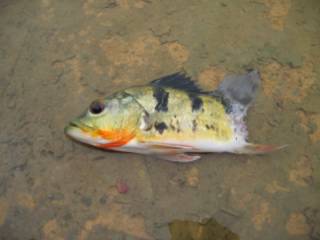 Peacock Bass attacked by Toman
Breeding Pairs Guarding Their Nest
Peacock Bass attacked by Toman
Breeding Pairs Guarding Their Nest
You will need a pair of good Polaroid sunglasses for this. Polaroid glasses can cut the sun’s glare and you can see very clearly what is happening below the water surface.
This unethical method is a continuation of keeping track of the Botak patches. Sometimes after casting and getting no bites, go back and check to see if there are any Peacock Bass near the Botak patch. Keep absolute still and avoid any unnecessary movement. If you have the patience you will be rewarded. Wait a little longer for any Peacock Bass that may want to come out of hiding and resume their duty of guarding the nest and doing their cleaning and fanning. Developing eggs and fries need oxygen and the breeding pairs know it too. If there is no disturbance or movement around the waters, the Peacock Bass will return very quickly, especially if they had already spawned and are waiting for the fries to hatch and swim free.
Whilst they are doing the guarding and cleaning, throw a piece of twig into the nest and the Peacock Bass will quickly remove it.
They will work together like doing army guard duties. One of them will wonder off to feed while the other will guard the nest. Usually the male will wonder off for longer periods, while the female will be more protective and stay with the nest for longer periods. The scene of one Peacock Bass coming back to take over its duty from its partner is really a heart wrenching sight and sobering experience.
You now have a dedicated pair of Peacock Basses guarding their nest.
THIS IS VERY IMPORTANT.
Please respect the breeding pair and spare a thought for their offspring. They are the future to our fishing at Lower Peirce Reservoir. Catch ONLY ONE of the parents at any one time. Leave the other to guard and fan the water around the nest so that the eggs or fries can continue to receive their oxygen supply.
Catching Breeding Pairs WITHOUT Harming them
Cast your fly near or over the nest and one of the Peacock Bass will attack it. Sometimes with so much force that I had smaller tippets snapped off with the fly dangling at the Peacock Bass mouth while it continue its duty. After hooking the Peacock Bass, bring it up quickly and return it into the water just as quickly. Remember they are needed to protect the eggs or fries as well as to supply the brood with a constant supply of oxygen with their fanning fins.
The released Peacock Bass will return back to the nest once they have calm down enough, which is usually less than 5 minutes. They will not be harm if caught and release properly and quickly.
If you wait for 10 to 15 minutes and cast your fly again, you will catch one of them again. Most probably the same Peacock Bass that took the fly on the earlier cast because it is the more aggressive and more protective of the pair.
BUT PLEASE LEAVE THEM ALONE FOR THE DAY.
This is my only plea for them. You can keep throwing your fly at them and they will continue to hit them with their same ferocity and vigor. They will be stressed and exhausted and will not have the ability to protect and care for the eggs or fries. Please come back the next day if you want another round. They will still be around and they will predictably still take your fly, with the same aggression and force.
When the fries become free-swimming, the pair will gather them and lead them away from the nest. But they will not wonder off too far from the area. There will be some late free-swimmers that must be watched and the pair will stay close by until all of them are gathered.
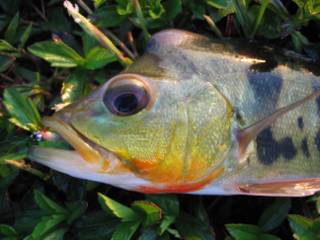 A magnificent male specimen with the "Cock" head
Sometimes you can see the same pair for over a week at the same spot. During this period they will bump your fly and seldom take it. Occasionally they will nib at the fly and get hooked. Sometimes a foul hook will hook the gills or stomach when they bump the fly.
Proven Flies to use for Peacock Bass
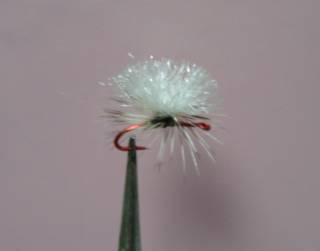
Charlies, Gotchas and Clousers are the proven flies to use at Lower Peirce Reservoir. Flies with weighted eyes have a better catch rate. But you can just throw about anything at them and you will catch one. In fact, there are reported cases where fishermen had caught a Peacock Bass using only a strip of plastic bag or raffle string to dress the fly.
The only time I find the Peacock Bass choosy or not biting is when they are gathering and caring for the fries. Most of the time, they will routinely blow away the fly the way they blow away debris when they were caring for the eggs. When agitated, they will bump or tail nib the fly. In this instance, I find a fly tied to Carrie Stevens specifications and proportion to be very helpful. Just leave about 5 millimetres of material extending from the hook bend. Too much and the Peacock Bass will miss the hook altogether when tail nibbling.
Small flies are also very productive at Lower Peirce Reservoir. If you are happy catching small to medium size Peacock Basses and Tomans, using small flies can increase your catch rate. My Lower Peirce Reservoir record catch with a single fly is 32 pieces of medium size Peacock Basses. The fly is a Size 12 White & Yellow Charlie. Experiment with the various flies yourself. Find your own secret weapons.
But during this phrase of your fishing adventure, try casting around the perimeters of the swimming fries and the breeding pair. There might be a big Peacock Bass going for the smaller Peacock Basses attacking the fries. If you are lucky enough a huge Toman investigating the commotion might just whack your fly to give you the record breaking catch you had been gunning for.
Please remember to Catch And Release


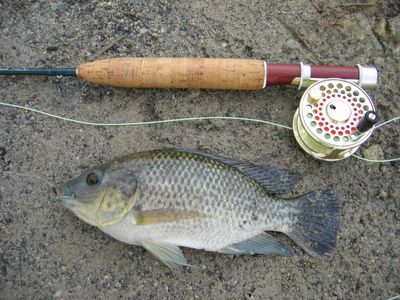
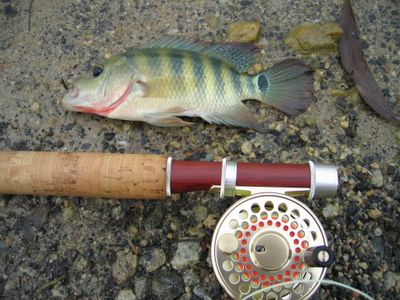
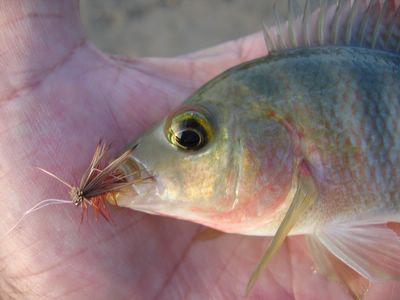
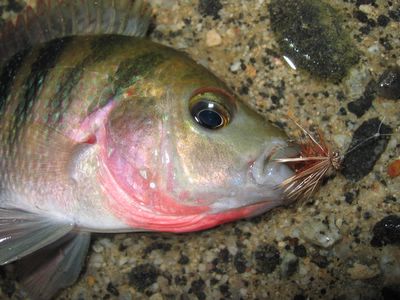
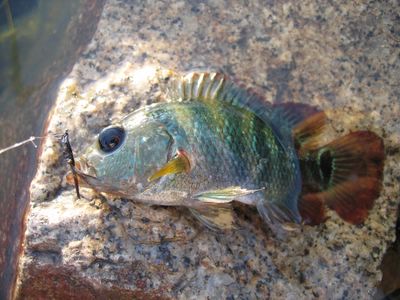

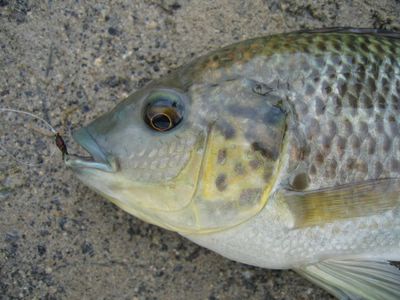
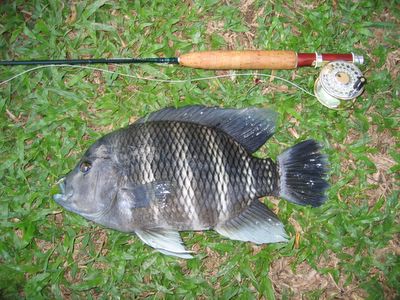
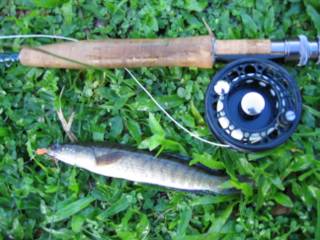
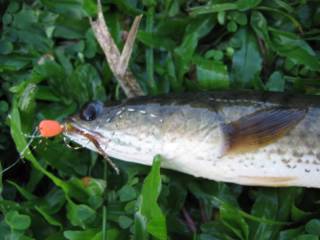
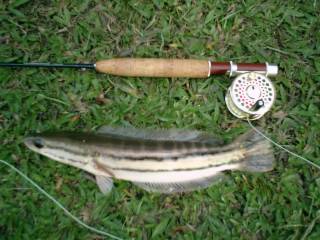



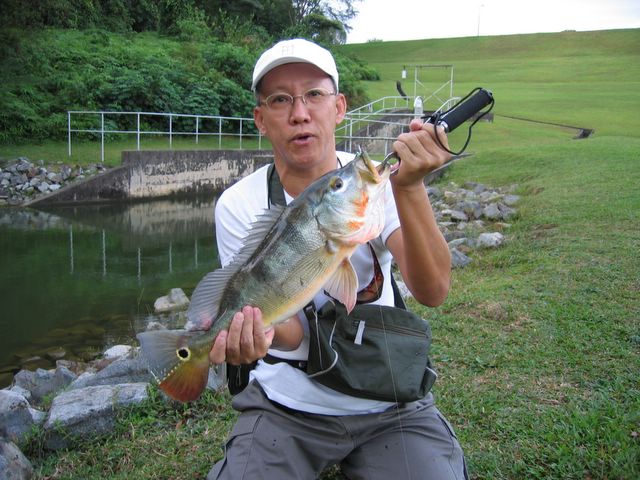
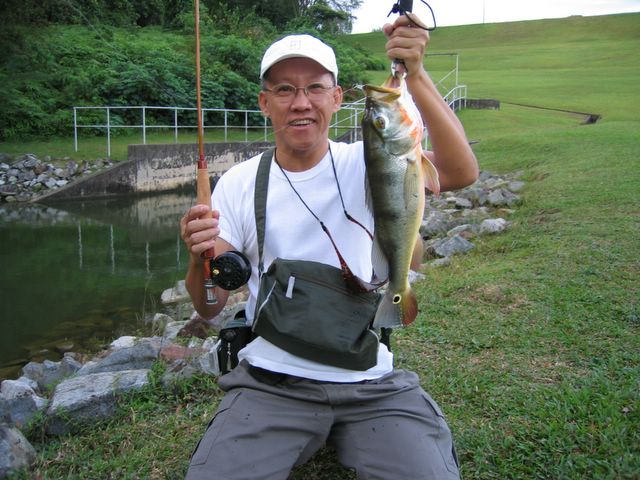
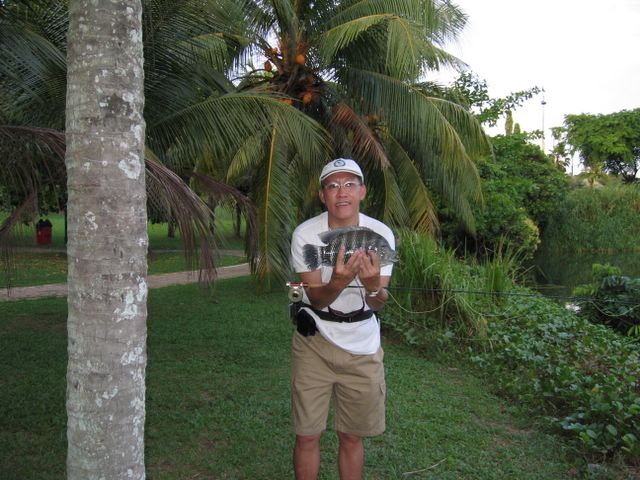
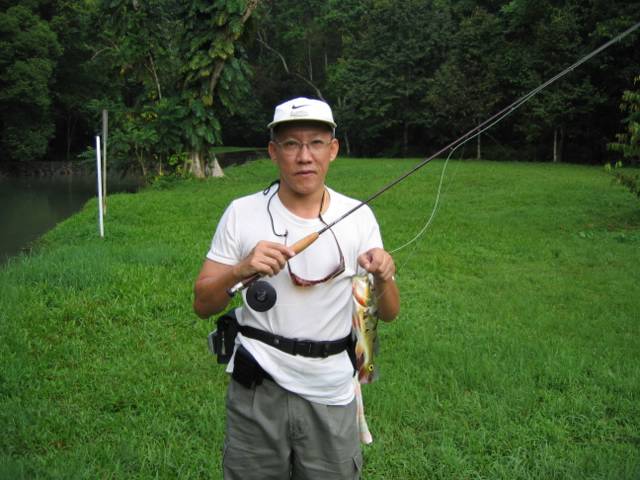
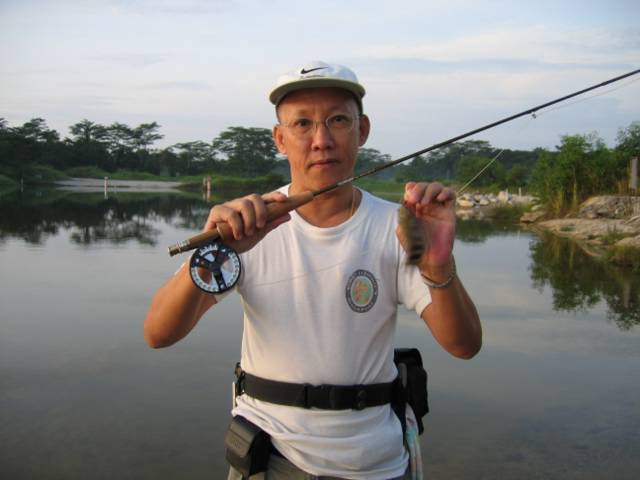
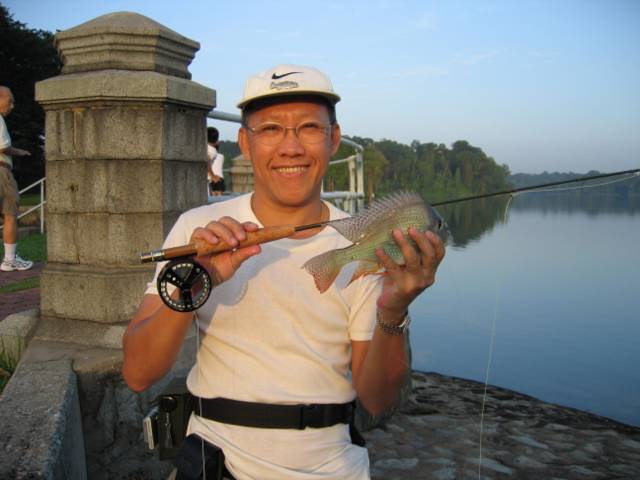
 Me with the Mama Temensis Peacock Bass and the Rick Cunningham Bamboo Rod.
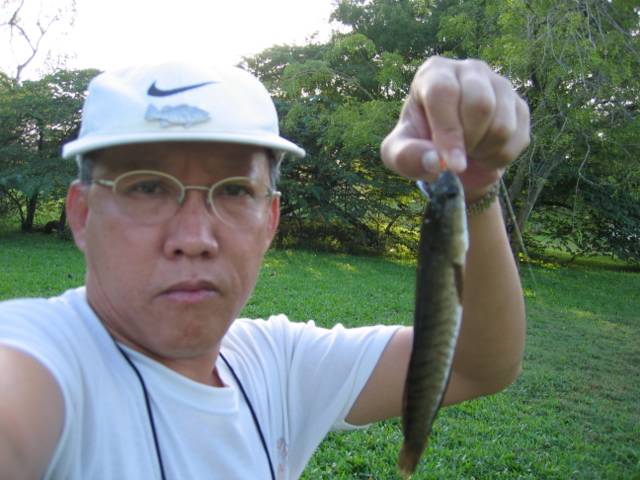
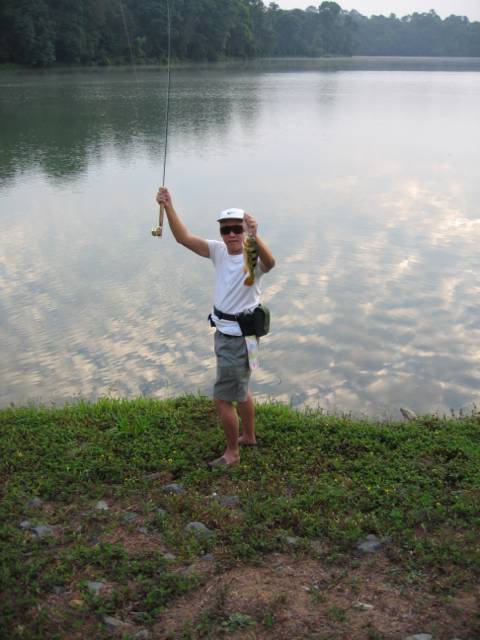
 Another shot......hehehe......